
Introduction
Sand flea bites are a common yet often misunderstood skin condition that affects people who spend time in coastal, tropical, and sandy environments. Whether you are enjoying a relaxing beach vacation or living in a region with sandy terrain, encountering sand fleas is a possibility. These tiny creatures can cause irritating bites that lead to itching, redness, swelling, and, in some cases, more serious complications if left untreated.
Despite their small size, sand fleas can significantly impact comfort and health. Many people confuse sand flea bites with mosquito or bed bug bites, leading to improper treatment. Understanding what sand flea bites are, how they occur, and how to manage them is essential for prevention and effective care. This comprehensive guide explores everything you need to know about sand flea bites, including their causes, symptoms, treatment options, prevention strategies, and real-life examples.
What is Sand Flea Bites?
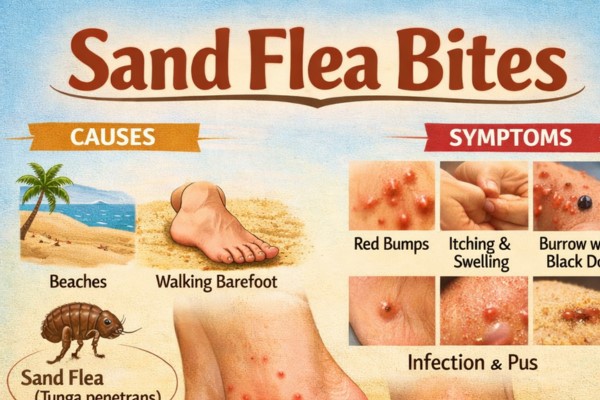
Sand flea bites are skin reactions caused by tiny parasitic or biting crustaceans commonly found in sandy environments such as beaches, deserts, and tropical regions. The term “sand flea” is often used to describe different organisms, but the most medically significant is the Tunga penetrans, also known as the chigoe flea.
Types of Sand Fleas
1. Biting Amphipods
- These are small crustaceans that live in damp sand.
- They primarily bite for defensive reasons and do not burrow into the skin.
- Their bites usually result in mild itching and irritation.
2. Chigoe Flea (Tunga penetrans)
- A parasitic flea found in tropical and subtropical regions.
- The female flea burrows into the skin to lay eggs, causing a condition known as tungiasis.
- This type of sand flea bite can lead to serious infections if untreated.
How Sand Flea Bites Occur
Sand fleas are most active during early morning and evening hours. They typically inhabit:
- Sandy beaches
- Coastal areas
- Marshes and mangroves
- Deserts
- Animal habitats
Humans are usually bitten when walking barefoot or sitting directly on infested sand. The bites often occur on the feet, ankles, legs, and sometimes the hands.
Key Features / Important Points Related to Sand Flea Bites
Understanding the key characteristics of sand flea bites helps in early identification and treatment.
1. Small Red Bumps
Sand flea bites often appear as tiny red or pink bumps, similar to mosquito bites.
2. Intense Itching
Persistent itching is one of the most common symptoms and may worsen at night.
3. Central Black Dot
In cases of tungiasis, a black dot may appear at the center of the lesion, indicating the presence of the embedded flea.
4. Clustered or Linear Pattern
Bites often occur in clusters, especially around the ankles and feet.
5. Swelling and Inflammation
Some individuals may experience localized swelling, redness, and tenderness.
6. Risk of Infection
Scratching the bites can lead to secondary bacterial infections.
Benefits and Advantages
Although sand flea bites themselves do not offer direct benefits, understanding them provides several advantages:
1. Early Detection
Recognizing the symptoms allows for prompt treatment and prevents complications.
2. Improved Preventive Measures
Knowledge of sand flea habitats helps individuals take effective precautions during travel.
3. Enhanced Public Health Awareness
Awareness reduces the risk of severe conditions such as tungiasis in endemic regions.
4. Better Travel Preparedness
Travelers can plan and pack appropriate protective gear and medications.
Disadvantages or Limitations
Sand flea bites come with several disadvantages that can affect health and quality of life.
1. Persistent Itching and Discomfort
The itching can interfere with sleep and daily activities.
2. Risk of Tungiasis
When caused by Tunga penetrans, the condition can become severe and painful.
3. Secondary Infections
Open wounds from scratching may lead to bacterial infections such as cellulitis.
4. Allergic Reactions
Some individuals may develop hypersensitivity reactions, including significant swelling or rashes.
5. Misdiagnosis
Sand flea bites are often mistaken for other insect bites, delaying appropriate treatment.
Detailed Explanation / Main Content Sections
Causes and Risk Factors
1. Environmental Exposure
Sand fleas thrive in warm, humid, and sandy environments. Beaches in tropical and subtropical regions pose the highest risk.
2. Walking Barefoot
Direct contact with infested sand significantly increases the likelihood of bites.
3. Poor Sanitation
Areas with limited hygiene and close proximity to animals are more prone to infestations.
4. Presence of Animals
Dogs, cats, pigs, and rodents can serve as hosts for sand fleas, increasing human exposure.
Symptoms of Sand Flea Bites
Mild Symptoms
- Small red bumps
- Itching or burning sensation
- Slight swelling
- Localized redness
Moderate Symptoms
- Painful lesions
- Blister formation
- Pus or discharge
- Enlarged nodules
Severe Symptoms (Tungiasis)
- Central black dot indicating the embedded flea
- Significant swelling and inflammation
- Ulceration
- Difficulty walking
- Fever or systemic infection in rare cases
Diagnosis of Sand Flea Bites
1. Physical Examination
Healthcare providers typically diagnose sand flea bites through visual inspection of the affected area.
2. Medical History
Information about recent travel to sandy or tropical regions helps confirm the diagnosis.
3. Dermoscopy
In suspected tungiasis, dermoscopy may be used to visualize the embedded flea.
4. Laboratory Tests
These are rarely required but may be performed if secondary infection is suspected.
Treatment Options
1. Home Remedies
Cold Compress
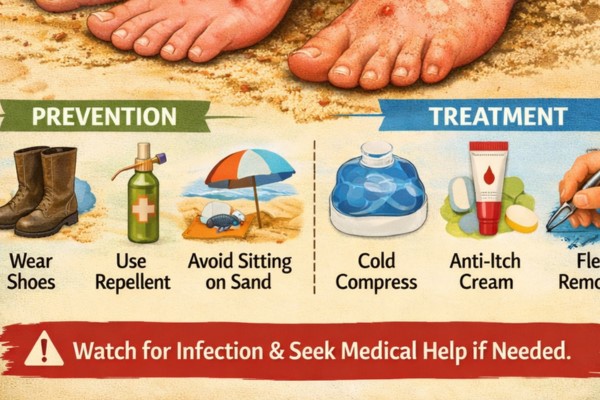
Applying a cold compress reduces swelling and relieves itching.
Baking Soda Paste
A mixture of baking soda and water can soothe irritated skin.
Aloe Vera
Aloe vera provides anti-inflammatory and cooling effects.
Oatmeal Baths
Colloidal oatmeal helps reduce itching and inflammation.
2. Over-the-Counter Medications
- Antihistamines: Reduce itching and allergic reactions.
- Hydrocortisone Cream: Decreases inflammation.
- Topical Antibiotics: Prevent secondary infections.
3. Medical Treatment for Tungiasis
Surgical Removal
A healthcare professional may carefully extract the embedded flea using sterile instruments.
Antibiotics
Prescribed if bacterial infection occurs.
Tetanus Vaccination
Recommended if immunization status is uncertain.
Antiparasitic Medications
In severe cases, medications such as ivermectin may be considered.
Prevention Strategies
1. Wear Protective Clothing
- Closed-toe shoes and socks
- Long pants when walking on beaches or sandy terrain
2. Use Insect Repellents
Repellents containing DEET, picaridin, or IR3535 are effective against sand fleas.
3. Avoid Sitting Directly on Sand
Use beach mats or towels to create a barrier.
4. Maintain Good Hygiene
Regular washing of feet and clothing reduces the risk of infestation.
5. Environmental Control
- Keep living areas clean.
- Treat pets for fleas.
- Avoid areas known to be heavily infested.
Examples or Real-Life Use Cases
Example 1: Beach Vacation in the Caribbean
A traveler walking barefoot on a tropical beach developed itchy red bumps around the ankles. Prompt use of antihistamines and hydrocortisone cream resolved the symptoms within a few days.
Example 2: Rural Community Exposure
In certain rural regions of South America and Africa, individuals developed tungiasis after repeated exposure to infested soil. Community health initiatives, including footwear distribution and environmental sanitation, significantly reduced infection rates.
Example 3: Pet-Related Transmission
A family experienced recurring sand flea bites due to an untreated pet dog. Veterinary care and home sanitation eliminated the problem.
Tips, Strategies, or Best Practices
1. Inspect Your Skin Regularly
Check feet and ankles after visiting sandy environments.
2. Pack a Travel Health Kit
Include antihistamines, hydrocortisone cream, antiseptic wipes, and insect repellent.
3. Keep Nails Short
Short nails reduce the risk of skin damage from scratching.
4. Seek Early Medical Attention
Consult a healthcare professional if symptoms worsen or signs of infection appear.
5. Protect Pets
Regular veterinary check-ups and flea treatments help prevent transmission.
Common Mistakes to Avoid
1. Ignoring Early Symptoms
Delaying treatment can lead to complications such as infection or tungiasis.
2. Scratching the Bites
Scratching increases the risk of bacterial infection and scarring.
3. Attempting Self-Removal of Embedded Fleas
Improper removal can leave parts of the flea inside the skin, leading to inflammation and infection.
4. Misidentifying the Bites
Confusing sand flea bites with mosquito or bed bug bites may delay appropriate care.
5. Neglecting Preventive Measures
Failing to wear protective footwear or use repellents increases exposure risk.
When to Seek Medical Attention
Seek medical care if you experience:
- Severe pain or swelling
- Pus or discharge
- Fever
- Difficulty walking
- Multiple embedded lesions
- Signs of allergic reaction such as difficulty breathing
Long-Term Complications
Although most sand flea bites are harmless, untreated tungiasis can lead to:
- Chronic ulcers
- Deformity of nails and toes
- Secondary bacterial infections
- Tetanus
- Gangrene in extreme cases
Early detection and treatment significantly reduce these risks.
Sand Flea Bites vs. Other Insect Bites
| Feature | Sand Flea Bites | Mosquito Bites | Bed Bug Bites |
|---|---|---|---|
| Location | Feet and ankles | Exposed skin | Any body part |
| Pattern | Clustered | Random | Linear (“breakfast, lunch, dinner”) |
| Central Black Dot | Sometimes | No | No |
| Burrowing | Possible (tungiasis) | No | No |
| Severity | Mild to severe | Mild | Moderate |
Conclusion
Sand flea bites are a common concern for individuals visiting or living in sandy and tropical environments. While most bites cause only mild irritation, the parasitic chigoe flea can lead to a more serious condition known as tungiasis. Recognizing the symptoms, understanding the risk factors, and implementing effective prevention strategies are essential for maintaining skin health and avoiding complications.
Prompt treatment with home remedies or medical care ensures quick recovery and minimizes discomfort. By wearing protective clothing, using insect repellents, and maintaining good hygiene, individuals can significantly reduce their risk of sand flea bites. Awareness and education remain the most powerful tools in preventing this often-overlooked health issue.
FAQs
1. Are sand flea bites dangerous?
Most sand flea bites are harmless and cause mild itching. However, bites from Tunga penetrans can lead to tungiasis, which requires medical treatment.
2. How long do sand flea bites last?
Mild bites typically heal within a few days to a week. Tungiasis lesions may persist for several weeks if untreated.
3. Can sand flea bites spread from person to person?
No, sand flea bites are not contagious. However, environmental exposure can affect multiple individuals in the same area.
4. What is the fastest way to relieve itching?
Applying a cold compress, using antihistamines, and applying hydrocortisone cream can quickly reduce itching and inflammation.
5. Do sand fleas only live on beaches?
No, sand fleas can also be found in deserts, marshes, rural communities, and areas with poor sanitation.
6. Can pets transmit sand fleas to humans?
Yes, pets can carry sand fleas into living environments, increasing the risk of human exposure. Regular veterinary care helps prevent this.