
Introduction
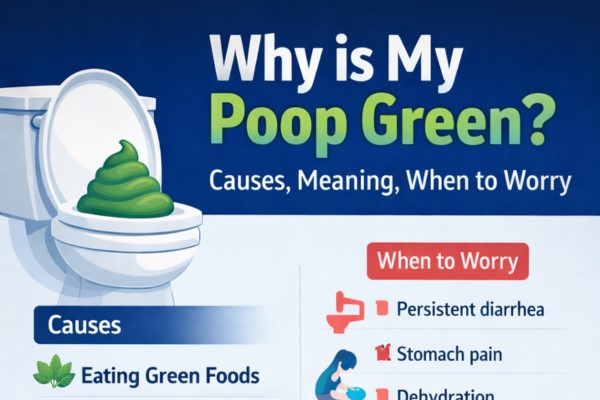
Noticing a sudden change in your stool color can feel alarming, especially when it turns green. Many people immediately assume something is wrong with their health, but in reality, green stool is quite common and often harmless. If you’ve ever wondered, “why is my poop green?”, you’re not alone. This is one of the most frequently searched digestive health questions online.
Your stool color can reveal a lot about what’s happening inside your body. From diet to digestion speed, several factors influence the appearance of your stool. While brown is considered the normal color, green stool does not always indicate a serious issue. In many cases, it’s simply your body reacting to what you eat or how your digestive system is functioning.
In this detailed guide, we will explore the causes of green poop, its meaning, when it is normal, and when you should consider seeking medical advice. By the end, you will have a complete understanding of this topic and feel more confident about your digestive health.
What Does Green Poop Mean?
The color of your stool is mainly influenced by bile, a digestive fluid produced by the liver. Bile starts as a yellow-green color and gradually changes to brown as it moves through the digestive tract.
When your stool appears green, it usually means one of the following:
- Bile has not fully broken down
- Food is moving too quickly through your intestines
- Certain foods or substances are affecting stool color
In most cases, green stool is temporary and not a cause for concern.
How Digestion Affects Stool Color
Understanding digestion helps explain why stool color changes.
When you eat food, it travels through:
- Stomach
- Small intestine
- Large intestine
During this process:
- Nutrients are absorbed
- Bile helps break down fats
- Gut bacteria further process waste
Normally, bile turns brown by the time it leaves your body. However, if digestion speeds up (like during diarrhea), bile doesn’t have enough time to change color, resulting in green stool.
Common Causes of Green Poop
1. Eating Green Foods
This is the most common cause of green stool.
Foods rich in chlorophyll (green pigment) can directly affect stool color:
- Spinach
- Kale
- Broccoli
- Green vegetables
- Green smoothies
Artificial food coloring in candies, drinks, and processed foods can also turn stool green.
If you recently ate these foods, there’s usually nothing to worry about.
2. Fast Digestion or Diarrhea
When food moves too quickly through your digestive system:
- Bile doesn’t fully break down
- Stool remains green
This often happens during:
- Diarrhea
- Mild infections
- Stomach upset
This type of green stool is usually temporary.
3. Antibiotics and Medications
Certain medications can affect gut bacteria and digestion.
Examples include:
- Antibiotics
- Iron supplements
- Some digestive medicines
These can change how bile is processed, leading to green stool.
4. Gut Bacteria Imbalance
Your gut contains billions of helpful bacteria that aid digestion.
If this balance is disturbed:
- Bile breakdown may be affected
- Stool color may change
Causes include:
- Poor diet
- Infections
- Antibiotic use
5. Food Intolerance or Sensitivity
Some people have difficulty digesting certain foods.
This can cause:
- Faster digestion
- Mild irritation
- Green stool
Common triggers:
- Dairy products
- Spicy foods
- Processed foods
6. Iron-Rich Diet or Supplements
Iron can darken stool and sometimes give it a greenish tint.
If you’re taking iron supplements, this is a normal side effect.
Is Green Poop Normal?
Yes — in most cases, green poop is completely normal.
It is usually harmless if:
- It happens occasionally
- There are no other symptoms
- It is linked to diet
Your body constantly processes different foods, so stool color may vary from time to time.
Green Poop in Babies and Children
Green stool is especially common in babies and young children.
In Babies:
- Breastfed babies may have green stool
- Formula-fed babies may also show color variation
Causes:
- Immature digestive system
- Diet changes
- Minor infections
Usually normal unless accompanied by:
- Fever
- Vomiting
- Severe diarrhea
When Should You Be Concerned?
Although green stool is often harmless, you should pay attention if it comes with other symptoms.
See a doctor if you notice:
- Persistent green stool for several days
- Severe diarrhea
- Abdominal pain or cramping
- Dehydration
- Weakness or fatigue
- Blood in stool
These may indicate:
- Infection
- Digestive disorders
- Nutrient absorption issues
Foods That Can Cause Green Stool
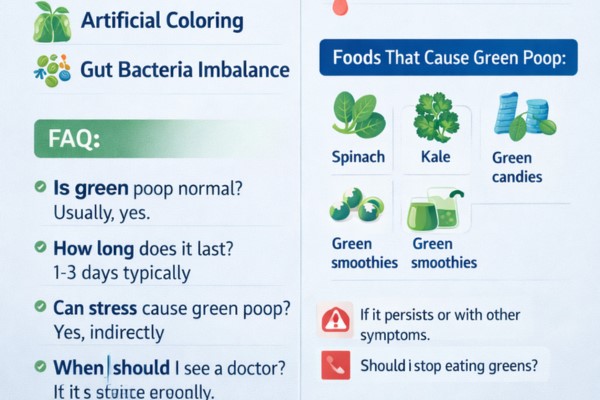
Certain foods are known to affect stool color:
- Leafy greens (spinach, kale)
- Broccoli and peas
- Green juices
- Artificially colored foods
- Green candies and drinks
These are harmless causes in most cases.
How to Prevent Green Stool
If you want to maintain normal stool color, follow these simple tips:
- Eat a balanced diet
- Avoid excessive processed foods
- Stay hydrated
- Maintain gut health
- Monitor food reactions
A healthy digestive system naturally regulates stool color.
Other Stool Colors and Their Meaning
Understanding stool color variations can help you monitor your health.
| Color | Meaning |
|---|---|
| Brown | Normal and healthy |
| Green | Fast digestion or diet-related |
| Yellow | Fat digestion issues |
| Black | May be due to supplements or bleeding |
| Red | Could be food-related or medical issue |
Occasional changes are normal, but persistent changes should be checked.
Importance of Digestive Health
Your digestive system plays a crucial role in overall health.
Healthy digestion helps:
- Absorb nutrients
- Maintain energy levels
- Support immunity
Changes in stool color, including green stool, are often your body’s way of signaling what’s happening internally.
Frequently Asked Questions (FAQs)
Is green poop dangerous?
No, in most cases it is harmless and related to diet or digestion.
How long does green poop last?
Usually 1–3 days, depending on the cause.
Can stress cause green stool?
Yes, stress can speed up digestion and affect stool color.
Should I stop eating green vegetables?
No, they are very healthy. They may temporarily change stool color.
When should I see a doctor?
If green stool persists or comes with other symptoms like pain or diarrhea.
Conclusion
Green stool may seem unusual, but it is usually not something to worry about. In most cases, it is caused by diet, digestion speed, or temporary changes in your body. Foods rich in green pigments, fast digestion, or medications are the most common reasons behind this color change.
However, it is important to stay aware of your body. If green stool continues for several days or is accompanied by symptoms like pain, diarrhea, or weakness, seeking medical advice is the best step.
Maintaining a balanced diet, staying hydrated, and supporting your digestive health can help prevent unnecessary concerns. Understanding your body’s signals allows you to stay informed, confident, and healthy.