
Introduction
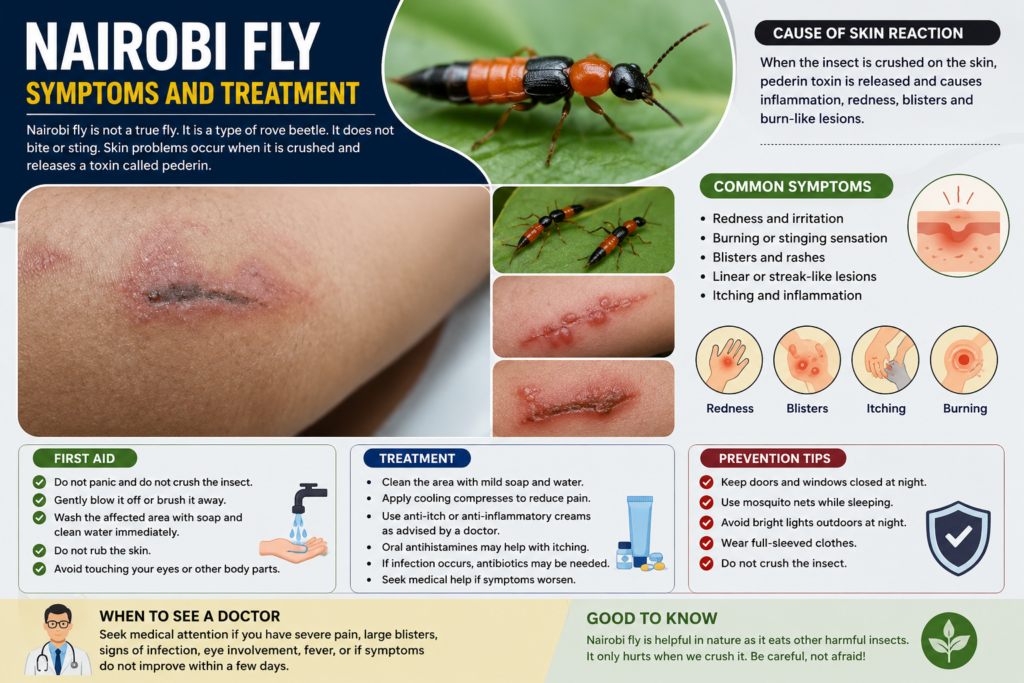
The Nairobi fly has gained significant attention in recent years because of its ability to cause painful skin irritation despite being a harmless-looking insect. Many people mistakenly believe that it bites or stings, but the real danger comes from a toxic substance released when the insect is crushed against the skin. This can lead to redness, blistering, burning sensations, and skin lesions that often resemble chemical burns.
If you have ever woken up with an unusual rash after accidentally crushing a small orange-and-black insect in your sleep, there is a chance that a Nairobi fly was responsible. Understanding the symptoms and seeking the right treatment at the right time can make a significant difference in recovery and help prevent complications such as infections or long-lasting skin discoloration.
This comprehensive guide explains everything you need to know about Nairobi fly symptoms and treatment, including causes, diagnosis, first aid, medical care, healing time, prevention tips, and frequently asked questions.
Table of Contents
What Is a Nairobi Fly?
The Nairobi fly is not actually a fly. It is a type of rove beetle belonging to the Paederus genus. These insects are commonly found in tropical and subtropical regions, especially during humid and rainy seasons.
They are small, slender insects measuring around 6 to 10 millimeters in length and are easily recognized by their bright orange-red and black coloration. Nairobi flies are attracted to lights at night, which is why they often enter homes through open windows and doors.
Importantly, they do not bite, sting, or intentionally attack humans. Skin problems occur only when the insect is accidentally crushed, releasing a powerful toxin called pederin.
Why Does a Nairobi Fly Cause Skin Problems?
Unlike mosquitoes or bees, Nairobi flies do not inject venom through a bite or sting. Instead, the toxin pederin is present in their body fluids.
When someone crushes the insect on their skin, pederin comes into direct contact with the affected area and causes a condition known as Paederus dermatitis. This reaction can resemble burns or severe allergic rashes and may develop over several hours.
Even touching another part of the body after contaminating your fingers with the toxin can spread the irritation to the eyes, face, or other sensitive areas.
Nairobi Fly Symptoms
Early Symptoms
The first symptoms often appear within a few hours after exposure. Initially, people may notice:
- Mild redness on the skin
- Burning or stinging sensation
- Tingling or irritation
- Slight swelling
- Itching in the affected area
At this stage, many people mistake the reaction for an insect bite or mild allergy.
Moderate Symptoms
As the reaction progresses, symptoms can become more noticeable and uncomfortable. These may include:
- Bright red patches
- Painful inflammation
- Blisters filled with fluid
- Burning similar to a chemical burn
- Increased sensitivity when touched
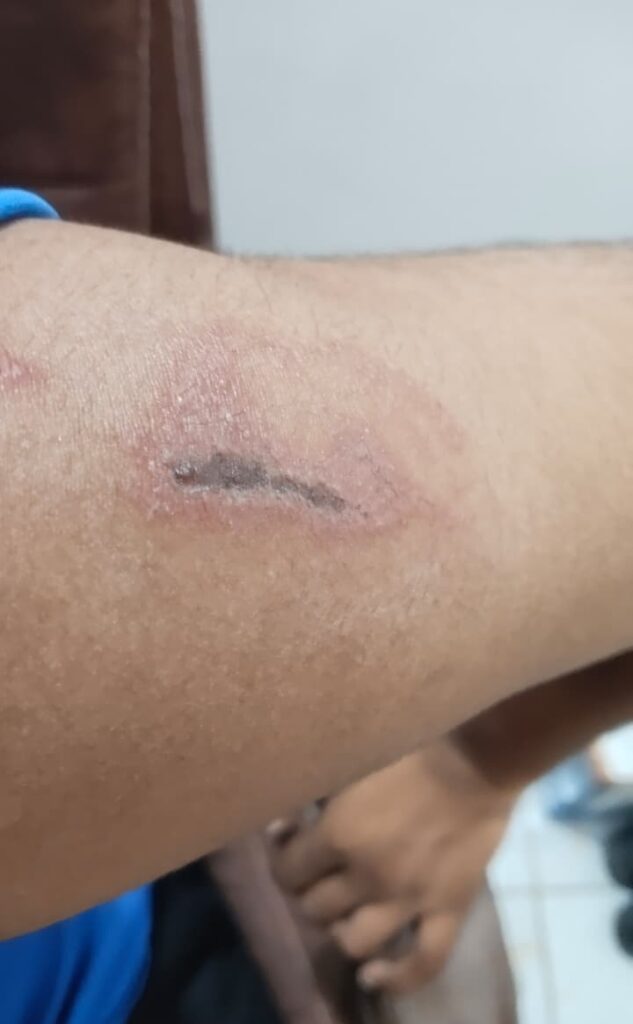
The rash often appears as a linear streak because the toxin spreads when rubbed across the skin.
Severe Symptoms
Some individuals develop more severe reactions, especially if a large amount of toxin contacts the skin or treatment is delayed.
These symptoms may include:
- Large blisters
- Skin peeling
- Dark scabs
- Secondary bacterial infection
- Swollen surrounding tissue
- Fever in rare complicated cases
If the toxin reaches the eyes, it can cause painful inflammation known as “Nairobi eye,” requiring prompt medical evaluation.
Common Areas Affected
The rash can appear anywhere but is most frequently seen on exposed skin, including:
Face
People often crush the insect unknowingly while sleeping, leading to facial lesions.
Neck
The neck is another common site because insects attracted to lights may crawl onto uncovered skin.
Arms and Hands
These areas are often affected when people brush the insect away or accidentally crush it.
Chest and Back
Individuals sleeping without protective coverings may experience lesions on the upper body.
What Does a Nairobi Fly Rash Look Like?
The appearance varies depending on severity but commonly includes:
- Red inflamed patches
- Linear streaks
- Blister formation
- Burn-like lesions
- Brown or black crusts during healing
- Temporary dark pigmentation after recovery
Many people confuse these lesions with burns, shingles, herpes, or allergic skin reactions.
First Aid After Contact
Quick action can reduce the severity of the skin reaction.
Wash Immediately
If you notice that a Nairobi fly has been crushed on your skin, wash the area thoroughly with soap and plenty of clean water as soon as possible.
Avoid Rubbing
Do not rub the affected skin because this spreads the toxin over a larger area.
Clean Your Hands
Wash your hands carefully before touching your eyes, nose, or other body parts.
Change Clothing
If the toxin may have transferred onto clothing or bedding, wash them to avoid repeated exposure.
Nairobi Fly Treatment
Mild Cases
For minor reactions, home care is often sufficient.
Treatment may include:
- Gentle cleansing with soap and water
- Cool compresses to reduce discomfort
- Keeping the area clean and dry
- Avoiding scratching
Most mild cases improve significantly within several days.
Medical Treatment
Doctors may recommend medications depending on symptom severity.
Topical Corticosteroid Creams
These help reduce inflammation, redness, and itching.
Oral Antihistamines
These may relieve itching and improve comfort.
Pain Relief
Over-the-counter pain relievers can reduce pain and inflammation if needed.
Antibiotics
Antibiotics are not routinely required but may be prescribed if secondary bacterial infection develops from scratching or damaged skin.
Treatment for Eye Exposure
If toxin enters the eye, immediate irrigation with clean water is essential. Medical evaluation is strongly recommended because eye involvement can become serious if untreated.
How Long Does It Take to Heal?
Recovery depends on the amount of toxin exposure and individual skin sensitivity.
Typical healing timeline:
- First 24 hours: Redness and burning begin.
- Days 2–4: Blisters and inflammation become more obvious.
- Days 5–10: Lesions dry and scab formation occurs.
- One to three weeks: Skin heals gradually.
- Several weeks to months: Residual dark pigmentation may slowly fade.
Most people recover completely without permanent scarring.
Can Nairobi Fly Lesions Leave Scars?
Permanent scars are uncommon.
However, post-inflammatory hyperpigmentation—a dark mark left after healing—is relatively common, especially in individuals with darker skin tones. These marks usually fade over time but may persist for several months.
Avoid scratching, picking scabs, or exposing healing skin to excessive sunlight to minimize discoloration.
When Should You See a Doctor?
Seek medical attention if:
- The rash is rapidly spreading.
- Large blisters develop.
- Severe pain occurs.
- There is pus or signs of infection.
- The eyes are affected.
- Fever accompanies the skin lesion.
- The patient is a young child, elderly person, or immunocompromised individual.
- Symptoms fail to improve after several days.
Prompt evaluation ensures proper treatment and reduces complications.
What Should You Avoid?
Many people unintentionally worsen the condition.
Avoid the following:
- Crushing the insect directly on your skin.
- Scratching blisters.
- Applying unknown home remedies.
- Bursting fluid-filled lesions.
- Ignoring eye exposure.
- Delaying medical consultation when symptoms worsen.
How to Prevent Nairobi Fly Skin Reactions
Prevention is far easier than treatment.
Turn Off Unnecessary Lights
Nairobi flies are attracted to bright lights, especially at night.
Install Window Screens
Fine mesh screens help keep insects outside.
Sleep Under Mosquito Nets
Bed nets reduce accidental nighttime contact.
Shake Clothing and Bedding
Inspect clothes and sheets before use if insects are common in your area.
Do Not Crush the Insect
If one lands on your skin, gently blow it away or use paper to remove it without squeezing.
Maintain Clean Surroundings
Reducing excess lighting and minimizing insect attraction around homes lowers risk.
Nairobi Fly Symptoms in Children
Children may experience more severe reactions because their skin is more delicate.
Parents should watch for:
- Excessive crying due to pain
- Blisters
- Facial swelling
- Eye irritation
- Fever
- Scratching leading to infection
Medical evaluation is advisable if significant symptoms occur.
Nairobi Fly vs Mosquito Bite
| Feature | Nairobi Fly | Mosquito Bite |
|---|---|---|
| Bite or sting | No | Yes |
| Cause of injury | Toxin released after crushing | Saliva injected during bite |
| Burning sensation | Common | Usually absent |
| Blisters | Frequently | Rare |
| Linear rash | Often | No |
| Healing time | One to three weeks | Several days |
| Risk of pigmentation | Higher | Usually low |
Myths About Nairobi Fly
Myth 1: It Bites Humans
False. The insect does not bite or sting.
Myth 2: Every Contact Causes Burns
False. Problems generally occur only when it is crushed and pederin contacts the skin.
Myth 3: The Rash Is Contagious
False. The rash itself cannot spread from person to person, although toxin transferred by contaminated fingers can affect another body area.
Myth 4: It Always Leaves Permanent Scars
False. Most cases heal without lasting scars, though temporary pigmentation is common.
Living With a Healing Nairobi Fly Lesion
During recovery:
- Keep the lesion clean.
- Protect it from excessive friction.
- Stay hydrated and maintain good nutrition.
- Follow prescribed medications consistently.
- Use sunscreen on healed areas if exposed outdoors to reduce persistent pigmentation.
Patience is important because skin color may take weeks to normalize even after the wound closes.
Conclusion
Nairobi fly dermatitis can be alarming because it often resembles a chemical burn or severe skin infection, but understanding the cause and acting quickly can significantly reduce its effects. The insect itself does not bite or sting; instead, skin damage occurs when it is crushed and releases the toxin pederin. Prompt washing, avoiding rubbing, and obtaining appropriate medical treatment when needed are key steps toward recovery.
Fortunately, most cases heal well with proper care and leave no permanent damage. By learning to recognize the symptoms and adopting simple preventive measures—such as avoiding crushing the insect and reducing nighttime exposure to lights—you can greatly reduce the risk of future incidents.
Frequently Asked Questions (FAQs)
1. Does a Nairobi fly bite humans?
No. Nairobi flies do not bite or sting. Skin reactions occur only when the insect is crushed and releases the toxin pederin onto the skin.
2. How long do Nairobi fly symptoms last?
Most mild to moderate cases improve within one to three weeks, although dark pigmentation may take longer to fade.
3. What is the best first aid after contact with a Nairobi fly?
Wash the affected area immediately with soap and water, avoid rubbing the skin, clean your hands thoroughly, and seek medical advice if severe symptoms develop.
4. Can Nairobi fly lesions become infected?
Yes. Scratching or improper wound care can allow bacteria to enter damaged skin, leading to a secondary infection that may require antibiotics.
5. Is Nairobi fly dermatitis contagious?
No. The skin reaction itself is not contagious and cannot spread from one person to another.
6. Can I treat Nairobi fly burns at home?
Many mild cases respond well to basic first aid and supportive care, but large blisters, eye involvement, severe pain, or signs of infection should be evaluated by a healthcare professional.